| Your Voice Matters | |
| Treasurer’s Report | Member Spotlight |
| PI Corner | Blog Post |
| News from the Net |
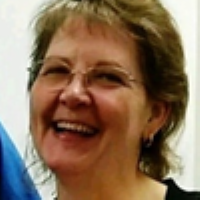
Dear NEAHQ Members and Colleagues,
As we move into the second half of the year, I’ve been reflecting on what makes NEAHQ such a strong professional community—and it comes down to the depth of expertise, generosity, and engagement of our members.
Our focus as a Board is simple: ensure that your membership delivers real, practical value. That means offering programming that you can apply directly in your work, creating opportunities to learn from peers facing similar challenges, and making it easier to stay connected to emerging trends in healthcare quality, safety, and regulatory readiness.
One of the best ways to strengthen that value is through your voice.
We continue to expand opportunities for members to present, whether through webinars, panel discussions, or collaborative sessions with our partner organizations. If you’ve led an improvement initiative, implemented a new approach, or navigated a complex quality or safety challenge, I encourage you to consider sharing your work. These sessions are not only impactful for attendees, but also a meaningful way to build your professional presence and contribute to the field.
We are also looking to deepen member involvement across NEAHQ. Serving on the Board—or participating in committees and program development—is a rewarding way to help shape the direction of the organization while connecting more closely with peers across the region. Whether you are early in your career or a seasoned leader, your perspective is valuable, and we welcome your interest.
In the coming months, you’ll see continued efforts to enhance member engagement, expand collaborative learning opportunities, and highlight the innovative work happening across New England.
Thank you for everything you do to advance healthcare quality and for the role you play in making this community so strong. I look forward to continuing this work together.
Warm regards,
Rita Morin, DNP, RN, NEA-BC, CPHQ
President, NEAHQ
Introducing the 2026 – 2027 NEAHQ Board of Directors!
President – Rita Morin, DNP, RN, NEA-BC, CPHQ, Senior Director Healthcare Quality and Patient Safety, Beth Israel Deaconess Hospital-Needham
Past-President – Sabrina Zerzouri, MPH, Senior Medicare Advantage Stars Associate, Devoted Health, Inc.
President-Elect – Daniel Okyere, Sc.D, RN, CPPS, CPHQ, Systems Redesign Coordinator, Dept of Veteran Affairs
Treasurer – Lauren Hartwell, MPH, Senior Program Manager, Population Health Management, Point32Health
Directors
Lynn Myers, RN, MBA, CPHQ
Maria Theresa Mercado, RN, MAN, MAEd, MPH, MD
Rutwa Naik, MHA, MBA, CPHQ, Director, Regulatory Affairs, Lahey Hospital and Medical Center
Daniel Morrissey, MBA, MPH, Manager, Regulatory Readiness, Tufts Medical Center
Allan Tambio, MHA, System Redesign & Improvement Specialist, Dept of Veteran Affairs
Ann Turbett, RN, MS, CPHQ, Quality RN Specialist, Mount Auburn Hospital
Aliysa Rajwani, BDS, MPH, Director of Quality and Patient Safety, Mount Auburn Hospital
Janice McLaughlin, MSN, RN, ACCNS-AG, CCRN-K, CNRN, SCRN, Senior Director, Quality Performance and Value-Based Care, Tufts Medical Center
Lynn Keeley, CHES, Director of Performance Improvement, Whittier Rehabilitation Hospital
Colleen Whatley, MSN, RN, Senior Quality and Safety Specialist RN, Dartmouth-Health - Dartmouth-Hitchcock Medical Center
Mathew Doyle, MA, System Director, Quality, Beth Israel Lahey Health
Zana Khoury, MS, CPHQ, CLSSGB, Director of Performance Improvement, Tufts Medical Center
NEAHQ and our affiliated partner associations, as part of the multi-state Healthcare Quality Association Collective, have several great programs scheduled this summer. Some programs are free for NEAHQ members, while others are discounted. Visit our Events Calendar to connect to registration information for each of these programs or navigate through the links below. Thank you for your continued support and participation!
- FAHQ Presents Survey Survival Tips in 2026 – A Dive into the Changes and How They Impact the Survey Process 15 July 2026 at 12:00 nn - 1:00 pm EDT
- FAHQ Presents AI-Enhanced Incident Reports: Identifying Root Causes and Tracking Trends 5 Aug 2026 at 12:00 nn - 1:00 pm EDT
- OrAHQ Presents CPHQ Review Course 06-07 Aug 2026 at 11:00 am - 5:30pm EDT
- OAHQ Presents Leadership Development and a Standard Work Foundation 18 Aug 2026 at 12:00 nn - 1:00pm EDT
As we plan future programs and services, we'd love to hear your ideas. Whether it's educational courses, professional development, networking opportunities, or other member services, your feedback will help us better understand what matters most to you. Please take a few minutes to complete the survey herein. NEAHQ Member Learning Opportunities Survey – Fill out form
Treasurer’s Report January – May 2026
NEAHQ currently has $42,361.08 in total assets as of the end of May 2026. Total revenue generated in 2026 YTD (Jan-May) is $3,430.49. NEAHQ generated $3,297.33 in revenue from membership dues while $133.16 came from programs. Total expenditures for 2025 YTD (Jan-May) was $3,674.81. Total expenditures were made up of administrative, operating and CEU expenses.
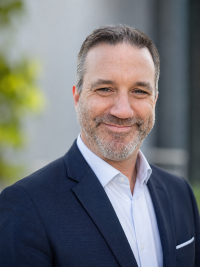
Would you please share a brief overview of your career?
My career has not exactly followed a straight line, which is probably one of the things I appreciate most about it. I have a master’s degree in forensic psychology, and during graduate school and an early internship in the Federal prison system I learned something very important about myself: talking to people all day as a therapist was probably not going to be my jam. What I did love was looking at information, seeing patterns, understanding behavior and systems, and helping tell the story behind the data.
That realization eventually led me into healthcare quality, although I am not sure I could say it was some perfectly planned career path. It was much more about opportunity, curiosity, and being willing to say yes when something needed to be done. I started in data and analysis, and throughout my career I often found myself taking on more responsibility because someone left, a role changed, or there was work that needed a home. Sometimes I knew exactly what I was getting into. Many times I absolutely did not. But I was curious, I liked fixing things, and I kept volunteering to do more.
Over time, those opportunities helped me build a career in quality, patient safety, regulatory readiness, patient experience, performance improvement, and analytics. I learned how to step into gaps, bring structure to complicated work, and help teams use data in a way that actually tells a story and drives improvement.
Today, I serve as System Director of Quality at Beth Israel Lahey Health. In that role, I help lead quality, safety, patient experience, regulatory readiness, and data analytics work across our system. It is challenging, meaningful, sometimes messy work, but I love it. My career has really been shaped by curiosity, opportunity, and saying yes.
Which aspect of your current position is especially rewarding?
I sometimes describe myself as a chaos coordinator, and I mean that in the best possible way. I work with a small but mighty four-person team (shout out to Caroline, Michelle, and Jess), and much of our work is focused on building system-level infrastructure where there previously was not much infrastructure at all.
What I find most rewarding is helping create clarity, transparency, and efficiency in work that can otherwise feel overwhelming. Whether we are building a dashboard, creating governance, standardizing a process, or helping leaders understand what the data is really telling them, the goal is always to make the work more useful. Not just more reports, not just more meetings, but information and structure that people can actually use to make better decisions.
There is something incredibly rewarding about knowing that we helped an organization, even in a small way, do something better, safer, or more efficiently. That may not always be visible work, but it matters.
I am especially proud of our continued push to move the conversation from patient experience to human experience. I believe patient experience and employee experience cannot be separated. Safety is the key cog that drives a better experience for the patients we serve and for the people who serve those patients. When we create safer systems, clearer processes, and better communication, we improve the experience for everyone involved in care.
Has any one individual greatly influenced your career?
I have been lucky to have supportive leaders who have shaped how I lead today, but one person who had a particularly meaningful impact on my career was Carol Jones, my leader at Beverly.
Carol gave me latitude. She trusted me to think outside the box, try new approaches, be creative, and solve problems in ways that were not always traditional. That kind of trust had a real impact on me. It gave me room to grow, to experiment, and to develop confidence in my own ideas.
That has very much influenced how I lead my own team now. I try to give people a lot of trust and encourage them to think through problems, come forward with solutions, and be creative. I am always there to support them, remove barriers, or be a sounding board, but I have learned that if I jump in too quickly, I will just start fixing things myself. And while I do love fixing things, that does not always help others grow.
So I try to create the same kind of space that was given to me: space to think, space to solve, space to try something new, and occasionally space to fail a little and learn from it. That is how people build confidence, and it is how stronger leaders are developed.
What led to your involvement with NEAHQ?
At this stage in my career, I have become increasingly aware of how important it is to prepare the next generation of healthcare quality leaders. In many organizations, there is not always a clear succession path. There is not always formal training on how to become a quality director, to lead teams, how to manage the complexity of the role, or how to build the skills needed to be successful.
That is what drew me to NEAHQ. I saw an opportunity to be part of a professional community that can help build, support, and grow quality professionals at all stages of their careers.
Healthcare quality work is broad and only getting broader. Quality leaders are expected to understand safety, regulatory readiness, patient experience, performance improvement, analytics, value-based care, health equity, and increasingly technology and AI. That is a lot for any one person to figure out alone.
NEAHQ provides an opportunity to learn from each other, share what works, and help people develop the confidence and skills they need to lead. For me, that is the heart of why I wanted to be involved.
What are your goals as a NEAHQ Board Member?
As a NEAHQ Board Member, one of my goals is to help support and develop the next generation of quality leaders. I would like to contribute to programs that help people build the practical skills needed to succeed in these roles, not just the technical knowledge, but the ability to lead, communicate, tell the story behind data, manage competing priorities, and create change in complex organizations.
I also want to help NEAHQ keep pushing forward. I have always enjoyed thinking outside the box and pushing the envelope, and I think healthcare quality needs that right now. We are all being asked to do more with less, and we need to be honest about the fact that traditional ways of working are not always going to be enough.
I am especially excited about the role AI can play in healthcare quality. People who know me know I am pretty passionate, maybe even a little obsessed, with how AI can help quality teams create efficiency, synthesize information, identify patterns, and free up time for higher-value work. I know firsthand that I would not be able to manage the volume and complexity of my week-to-week work without the efficiencies AI helps create.
For me, this is not about replacing the judgment, relationships, or expertise of quality professionals. It is about giving them better tools so they can spend more time on the work that really requires human insight. I would love to help NEAHQ be at the front of that conversation.
How do you balance your demanding professional life with your personal life?
With four kids, I am not sure balance is a word I know. Some days it is more like organized chaos with snacks, carpools, homework, and someone asking where their shoes are five minutes after we were supposed to leave.
My wife Sarah and I have four kids: Delaney, Brynn, Andrew, and Emerson. They keep me very busy, usually tired, and very happy. Spending time with them is what helps me stay grounded. I do not have a ton of time for hobbies right now, but I genuinely enjoy doing the things they like to do and being part of whatever season of life they are in.
I try to be intentional about when I stop working. My goal is to shut work down by a certain time and be present at home. If I need to do more, I try to wait until after the kids are in bed, unless of course we are watching the latest Disney movie for the nth time, in which case all bets are off.
The work I do is important to me, and I care deeply about it. But my family gives me perspective. They remind me that while healthcare quality can feel urgent and all-consuming, there is also life happening right in front of me. Life moves quickly and I try to make sure I do not miss too much of it.
PI Corner – One Factor At a Time (OFAT)
What is OFAT?
One Factor at a Time (OFAT) is a simple improvement method that tests one change at a time while keeping everything else the same. This helps teams determine whether a specific change truly makes a difference.
How does it work?
- Identify a problem and a possible contributing factor.
- Change only that factor.
- Measure the results.
- Decide whether the change improved performance before testing another factor.
Why does it work?
When multiple changes are introduced simultaneously, it can be difficult to know which one caused the improvement. OFAT isolates a single variable, making it easier to identify cause and effect and make evidence-based decisions.
What is a practical example?
A hospital unit is experiencing delays in patient discharge. Rather than implementing several changes at once, the team tests one intervention: conducting discharge planning rounds before 10:00 a.m. while keeping all other processes unchanged. After several weeks, the average discharge time improves and patient flow increases. Because only one factor was changed, the team can be more confident that the earlier discharge rounds contributed to the improvement.
Why does it matter?
OFAT is easy to understand, low-cost, and useful for small-scale quality improvement projects. As a foundational testing method in performance improvement, it provides a straightforward way to evaluate changes and understand their impact. By focusing on one factor at a time, teams can make informed decisions based on evidence rather than assumptions.
References
- Abuzied Y, Alshammary SA, Alhalahlah T, Somduth S. Using FOCUS-PDSA Quality Improvement Methodology Model in Healthcare: Process and Outcomes. Global Journal on Quality and Safety in Healthcare. 2023.
- Endalamaw A, Khatri RB, Mengistu TS, et al. A scoping review of continuous quality improvement in the healthcare system: conceptualization, models and tools, barriers and facilitators, and impact. BMC Health Services Research. 2024.
- Shah A, Sunol R. What does the future of quality improvement look like? International Journal for Quality in Health Care. 2024.
The NEAHQ Blog features frequent posts from healthcare quality professionals on topics that range from emerging healthcare trends, new legislation, real-world application of PI principles, and much more! Recent blog posts have discussed the impact of NEAHQ membership on professional development in healthcare, and how organizations can rethink their strategies around interpretation and translation vendors. Check out our recent blog posts here.
Making Patient Materials More Inclusive for LGBTQ+ Communities
Since 2012, The Conversation Project has focused on serious illness messaging that reaches as many people as possible. That includes LGBTQ+ communities. We aimed to create resources that anyone could pick up and say “this is for me” — without needing to identify with a specific group. We continue to learn, and along the way, we’re often asked what has worked for us. Here, we’re sharing a few practical approaches that have helped us reach more people.
For anyone creating patient-facing materials, here are specific language and imagery choices that have helped make our resources more inclusive:
- Use gender-neutral language whenever gender is not relevant. Review stories and remove gendered language if unnecessary. For example, use “child” instead of son/daughter, “spouse” or “partner” instead of husband/wife, “parent” instead of mother/father, and singular “they” instead of he/she.
- Avoid assumptions about relationships. Don’t assume marital status or monogamy; allow space for people to name more than one partner or support person. We also avoid the phrase “loved one,” recognizing that family relationships can be complex or strained.
- Offer a wide range of examples of “who matters most,” such as partner, chosen family members, cousin, friend, or faith/spiritual advisor.
- Use photography or illustrations that reflect the community you serve, including representation of diverse gender expressions and a variety of relationships.
- Partner with LGBTQ+ individuals to review language and imagery before you roll out the new tool. Compensate contributors for their time.
Our goal is not to create materials only for LGBTQ+ audiences, but to ensure that materials feel inclusive and appropriate for many people. This process also called attention to broader intersectional opportunities. For example, we incorporate illustrations and photos reflecting various ages and racial and ethnic backgrounds; and images of people with disabilities, including use of adaptive equipment. We’ve developed multiple language translations and audio versions of our guides.
Read more from Kate DeBartolo at the Institute for Healthcare Improvement here: Making Patient Materials More Inclusive for LGBTQ+ Communities | Institute for Healthcare Improvement
State of Healthcare Safety 2026
Safety is healthcare’s most sacred promise—but sustaining high reliability requires aligned leadership, strong learning systems, and workforce trust.
“State of Healthcare Safety 2026,” a Press Ganey Signature Report, draws on data from 1.3M employees, 23.5M patients, and 7.1M safety events to examine where safety performance is strengthening, where it remains fragile, and what leadership actions will accelerate progress.
Insights from “State of Healthcare Safety 2026” include:
- Safety culture is rebounding—but recovery is uneven. Nearly half (46.6%) of employees still report low perceptions of safety culture, with variation by role and shift.Social capital drives performance. High-trust, high-teamwork organizations are 50–80% more likely to outperform on key safety outcomes.
- Safety suffers when a single organization operates as three hospitals under one roof. When safety culture and patient experience vary across days, nights, and weekends, inconsistency becomes a risk—leading to more safety events and patients feeling less safe.
- Reporting culture predicts results. Facilities that report events at expected or higher rates are over 8x as likely to lead on core safety culture metrics.
- Reported assaults on nurses continue to rise—and those on the night shift bear the brunt of it. Employees who experience violence from patients or families report lower engagement and weaker perceptions of safety culture across every domain.
Read more from Press Ganey here: State of Healthcare Safety 2026 | Press Ganey
We Want to Hear From You
Do you have a quality event happening that you would like your fellow NEAHQ members to know about? We are interested in original content about a successful project, recent promotion and any other quality news you would like to share. Please submit articles for approval and posting to admin@neahq.org.